
The tree is up, the oven has been running since nine, and three extension cords are feeding a single outlet behind the couch. Nothing about that scene looks dangerous, and that’s exactly how most holiday fires start.
December puts more strain on a home than any other month. More burners going at once, more cords behind the couch, more open flames on the mantel, and a dried-out evergreen sitting three feet from the heat vent. Here are the leading causes of holiday house fires and the steps you can take to keep them from starting.
Holiday Fire Safety at a Glance
- Never leave the stovetop unattended, and keep a metal lid nearby for grease flares
- Water a live tree daily and keep it three feet from candles, vents, and fireplaces
- Inspect light strands before they go up, and skip the daisy-chained extension cords
- Test every smoke alarm, and keep an extinguisher within reach of the kitchen
- Call for fire restoration services within 48 hours, since soot and water keep causing damage after the fire is out
Cooking Remains the Leading Cause of House Fires
Cooking accounts for nearly half of all reported home fires year-round, and unattended cooking is the top reason they start. Thanksgiving is the single busiest day in the country for home cooking fires, followed by Christmas Day and Christmas Eve.
If you plan on doing some holiday cooking this season, here are a few habits to start following:
- Keep a metal lid near the stovetop to smother a grease flare, and never pour water on a pan fire
- Clear towels, oven mitts, and gift wrap off the counters near the range before cooking begins
- Deep-fry a turkey outdoors on a level surface, at least 10 feet from the house
A Dry Christmas Tree Burns Faster Than Expected
Tree fires don’t happen often, but when they do, they turn serious far more often than the average house fire. Fire researchers have found these fires to be roughly five times more deadly because of how fast they grow.
Water a live tree every day and get it out of the house once needles fall off at a touch. Keep the stand at least three feet from fireplaces, radiators, candles, and heat vents, and set it where it won’t block the way out.
Decorative Lighting and Overloaded Circuits
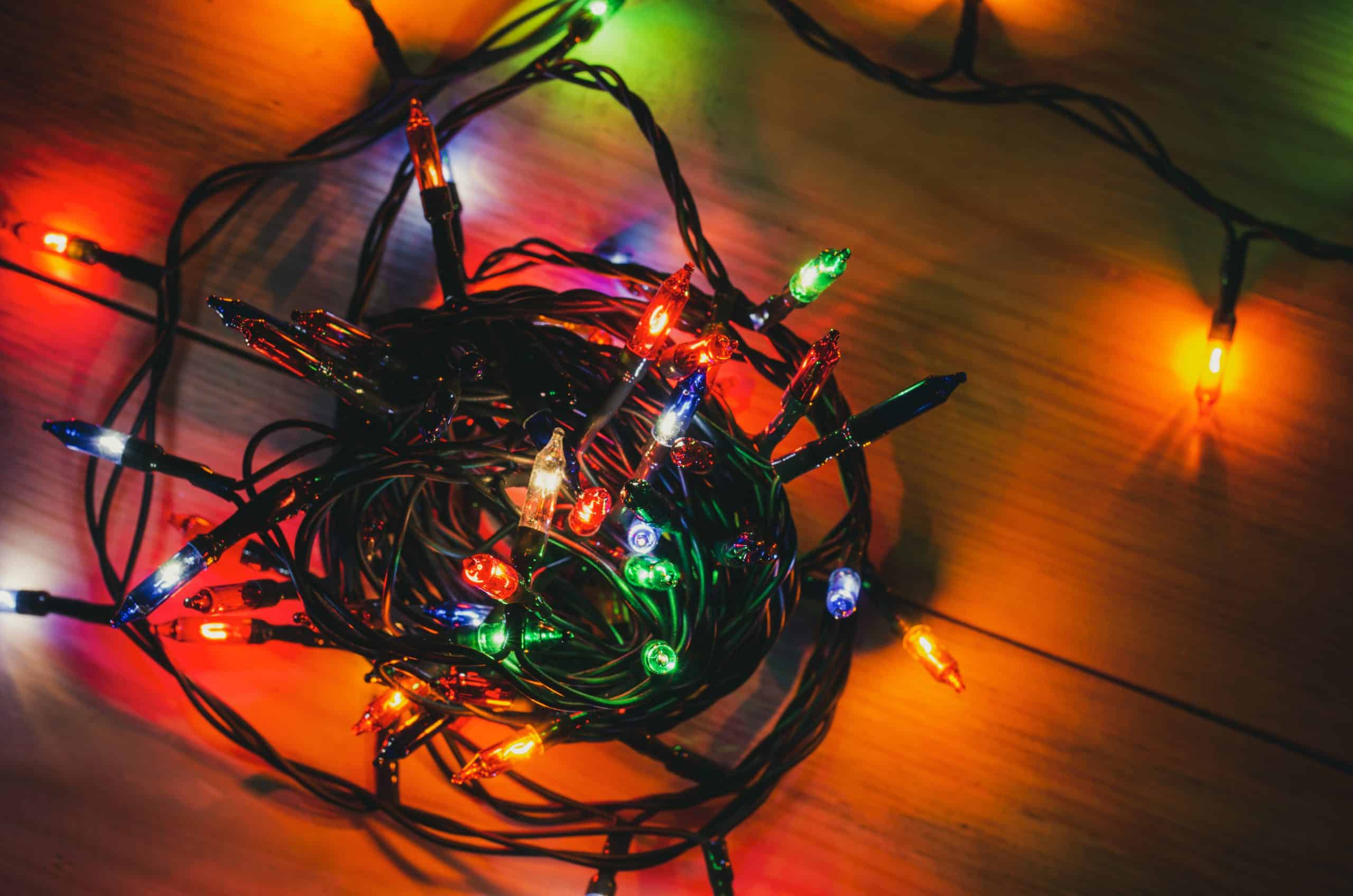
Electrical distribution or lighting equipment is involved in two of every five home Christmas tree fires. Frayed cords, cracked sockets, and daisy-chained extension cords account for most of that total.
Before the lights go up this year, run through a quick check:
- Inspect each strand and discard anything with exposed wire or a damaged plug
- Use lights rated for exterior conditions on the porch and roofline, and run them through GFCI-protected outlets
- Switch everything off before bed and before leaving the house
Candles Peak on Christmas Day
Christmas is the single biggest day of the year for home candle fires, at roughly two and a half times the daily average. And in three of every five candle fires, the flame sat too close to something flammable.
That combination is what makes the holiday so risky. Mantels and tables that sit mostly bare the rest of the year end up crowded with decorations, and the candle gets set down in whatever space is left.
Garland, wrapping paper, paper napkins, and dried greenery all belong well away from an open flame. If you’re still looking for that warm glow, try flameless LED candles. They give a mantel the same look with none of the exposure.
Heating Equipment and Middle Tennessee Cold Snaps
Nashville winters swing hard, and a stretch of 25-degree nights puts space heaters and fireplaces into constant use. Nearly half of all home heating fires occur in December, January, and February.
Those cold snaps also tend to arrive fast, which means heaters come out of the closet and fireplaces get lit without much thought. A little prep before the temperature drops goes a long way.
Give every space heater three feet of clearance on all sides and plug it directly into a wall outlet rather than a power strip. Schedule a chimney inspection and sweep before the first fire of the season, and use a screen to contain embers.
Do a Five-Minute Walkthrough Before Guests Arrive
Holiday fire safety in Nashville homes starts with working smoke alarms. Test every alarm on every level, replace batteries that chirp, and swap out any unit older than 10 years.
Alarms buy time, but only if everyone knows what to do with it. The rest of the walkthrough covers that part:
- Keep a fire extinguisher within reach of the kitchen, and make sure someone in the house knows how to operate it
- Walk through two ways out of each room
- Pick a meeting spot at the curb so everyone ends up in the same place
Prevention Lowers the Risk, Restoration Limits the Damage
A dry tree, a crowded outlet, an unattended pan, and a candle set too close to the garland account for most of what goes wrong in a home during December. The habits that prevent them take minutes, and they work.
Fires still happen in careful households, though, and what comes next decides how much of the house survives. Flames cause the obvious damage, but smoke, soot, and the water used to put the fire out keep working long after the trucks pull away. One incident often turns into several kinds of damage at once.
Restoration is what stops that clock. Soot gets removed before it etches finishes, odor gets pulled out of drywall and ductwork, and framing gets dried before mold finds the moisture it needs.
Timing drives the outcome more than the severity of the fire, the same way the first hour after a roof leak shapes everything that follows. Materials that look ruined in the first 48 hours are often salvageable, and the same materials become a demolition line item a week later. That window is why Nashville homeowners call AccuWorks.
Start Your Nashville Fire Damage Repair With AccuWorks
The first days after a fire decide how much of your home comes back, since soot keeps etching surfaces and saturated framing holds moisture long enough to invite mold. That’s why AccuWorks responds fast, and why our service professionals, trained by industry-leading experts, handle every phase in-house from inspection through reconstruction. Give us a call today and let our crew start the restoration while it still makes the biggest difference.